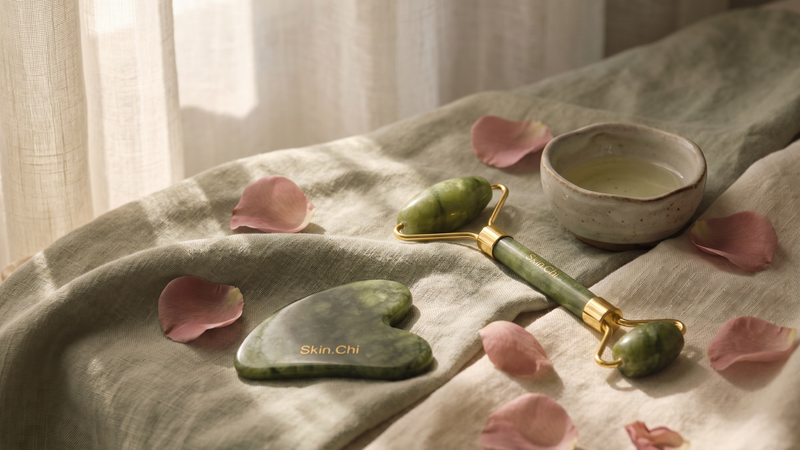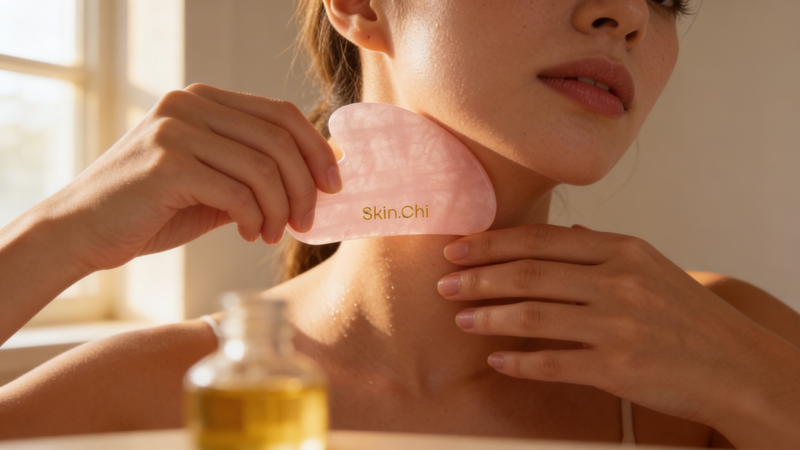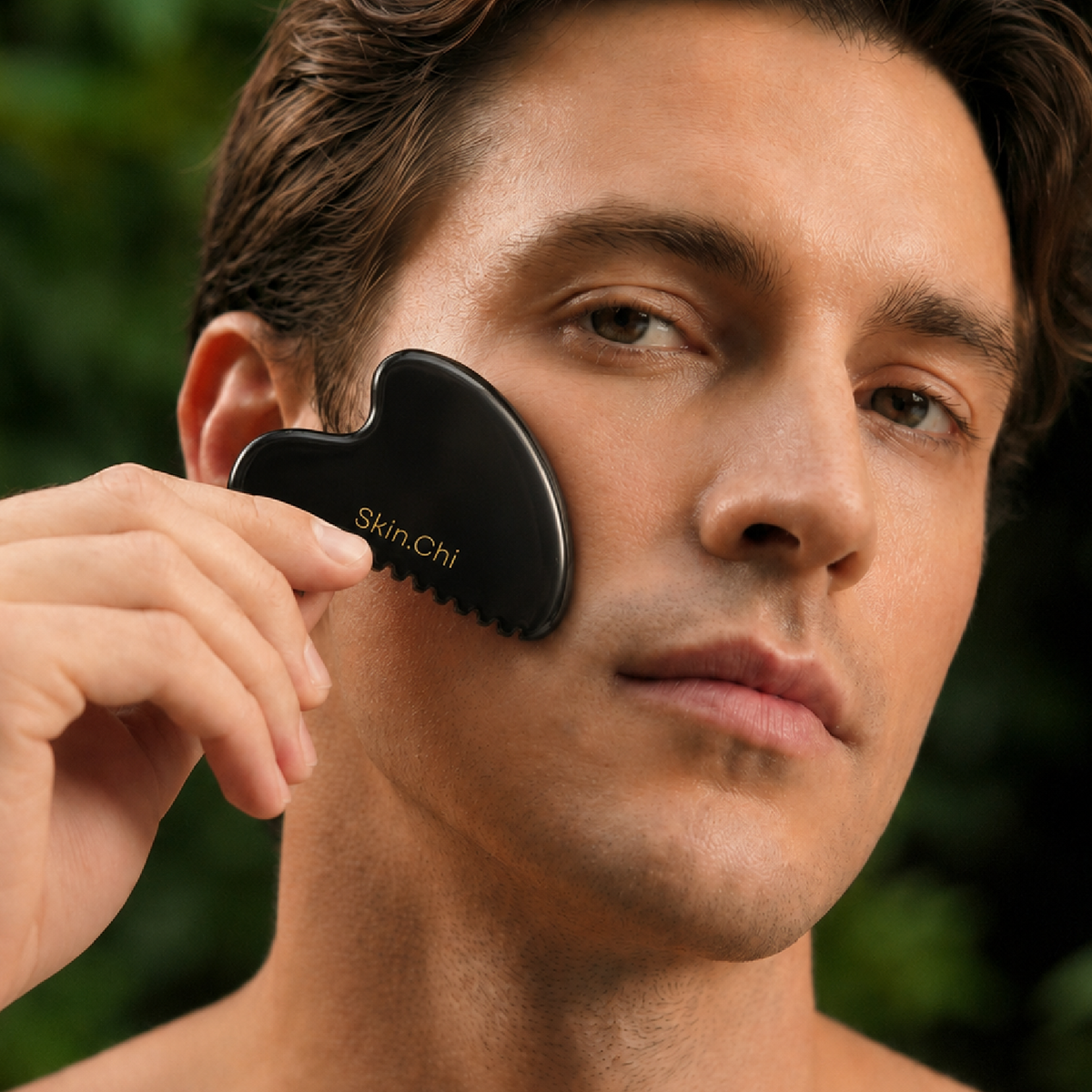
If you've already got the hang of a smooth gua sha, the comb edge is where your routine goes deeper - literally. The small, rounded teeth along one edge of a comb gua sha are designed to work more precisely and with more targeted pressure than a flat stone, making it a favourite for tension-heavy areas like the jaw, brow and cheeks. In this guide, we'll explain what makes the comb edge different, the benefits it offers, and how to use it safely alongside your smooth gua sha.
What Is a Comb Edge Gua Sha?
A comb edge gua sha is a facial tool with a row of small, blunt teeth carved into one edge of the stone, alongside the smooth curved edges you'd find on a traditional gua sha. Instead of gliding broadly across the skin, the teeth are designed to "comb" through the soft tissue, applying more concentrated pressure to a smaller surface area.
It isn't a hair or scalp tool — it's built entirely for the face, offering a deeper, more targeted alternative to the broad, sweeping strokes of a smooth gua sha stone.
Benefits of the Comb Edge for Facial Massage
· Deeper, more targeted pressure. The teeth concentrate pressure into smaller points, making it easier to work into tight spots that a flat edge can glide straight past.
· Helps release stubborn tension. Areas like the jaw, temples and brow tend to hold tension that a smooth edge alone doesn't always reach. The comb edge is designed to work into these areas more directly.
· Supports circulation at a finer level. The repeated, close-set contact points are commonly used to stimulate microcirculation across smaller, more precise areas of the face.
· Pairs well with your smooth gua sha. Many people use the smooth edges for broad, lymphatic-style strokes, then switch to the comb edge to finish with focused work on the jawline, cheekbones or between the brows.
· A different sensory ritual. The stimulating, slightly textured feel of the teeth offers a distinct sensation from smooth gua sha - some find it a more invigorating way to start the day.
How to Use a Comb Edge Gua Sha
1. Cleanse your skin and apply a facial oil generously - the teeth need enough glide to avoid catching or tugging.
2. Hold the tool at a shallow angle, almost flat against the skin.
3. Use the smooth edges first for broad, upward and outward strokes across the cheeks, jaw and forehead.
4. Switch to the comb edge for smaller, more deliberate movements over areas of tension - along the jawline, around the temples, or between the brows.
5. Use light, repeated strokes rather than pressing hard. The teeth already concentrate pressure, so less force goes further.
6. Finish with a few long strokes down the neck using the smooth edge to support lymphatic movement.
Comb Edge vs Smooth Gua Sha: When to Use Each
Reach for the smooth edge when you want:
· Broad, sweeping strokes across larger areas
· A gentler, more soothing ritual
· Lymphatic-style movement down the neck and jawline
Reach for the comb edge when you want:
· Deeper, more concentrated pressure on a specific spot
· Targeted release for the jaw, temples or brow
· A finishing step after a broader smooth gua sha routine
Most people don't choose one over the other — they use both in the same session, smooth first, comb edge to finish.
Common Mistakes to Avoid
· Skipping the oil. The comb edge needs more glide than a smooth stone, so under-oiling is the most common cause of discomfort or dragging.
· Pressing too hard. Because the teeth already concentrate pressure, heavy force can feel intense fast. Let the tool do the work.
· Using it as your only tool. The comb edge is best as a targeted finishing step, not a replacement for the broader strokes of a smooth gua sha.
· Rushing the ritual. Slow, deliberate movement gives better results than quick scraping motions.
Frequently Asked Questions
Is a comb edge gua sha the same as a scalp comb?
No. A comb edge gua sha is designed entirely for the face — the teeth work into facial tension points. Scalp combs are a separate category of tool built for the hair and scalp.
Does the comb edge hurt?
It shouldn't. The sensation is more concentrated than a smooth edge, but it should still feel like a firm, comfortable massage rather than anything sharp or painful.
Can I use the comb edge every day?
Yes, gently. Many people use the smooth edge daily and bring in the comb edge two to four times a week for more focused tension relief.
Do I need a different oil for the comb edge?
The same facial oil you use for gua sha works well — just make sure to apply enough for the teeth to glide smoothly.
Which areas benefit most from the comb edge?
The jawline, temples and the area between the brows tend to hold the most tension and respond particularly well to the more targeted pressure of the comb edge.
Discover the Skin.Chi Comb Gua Sha
Whether you're adding depth to an existing gua sha ritual or starting fresh, our comb edge tools are designed to work alongside our smooth gua sha and rollers for a complete facial massage routine.